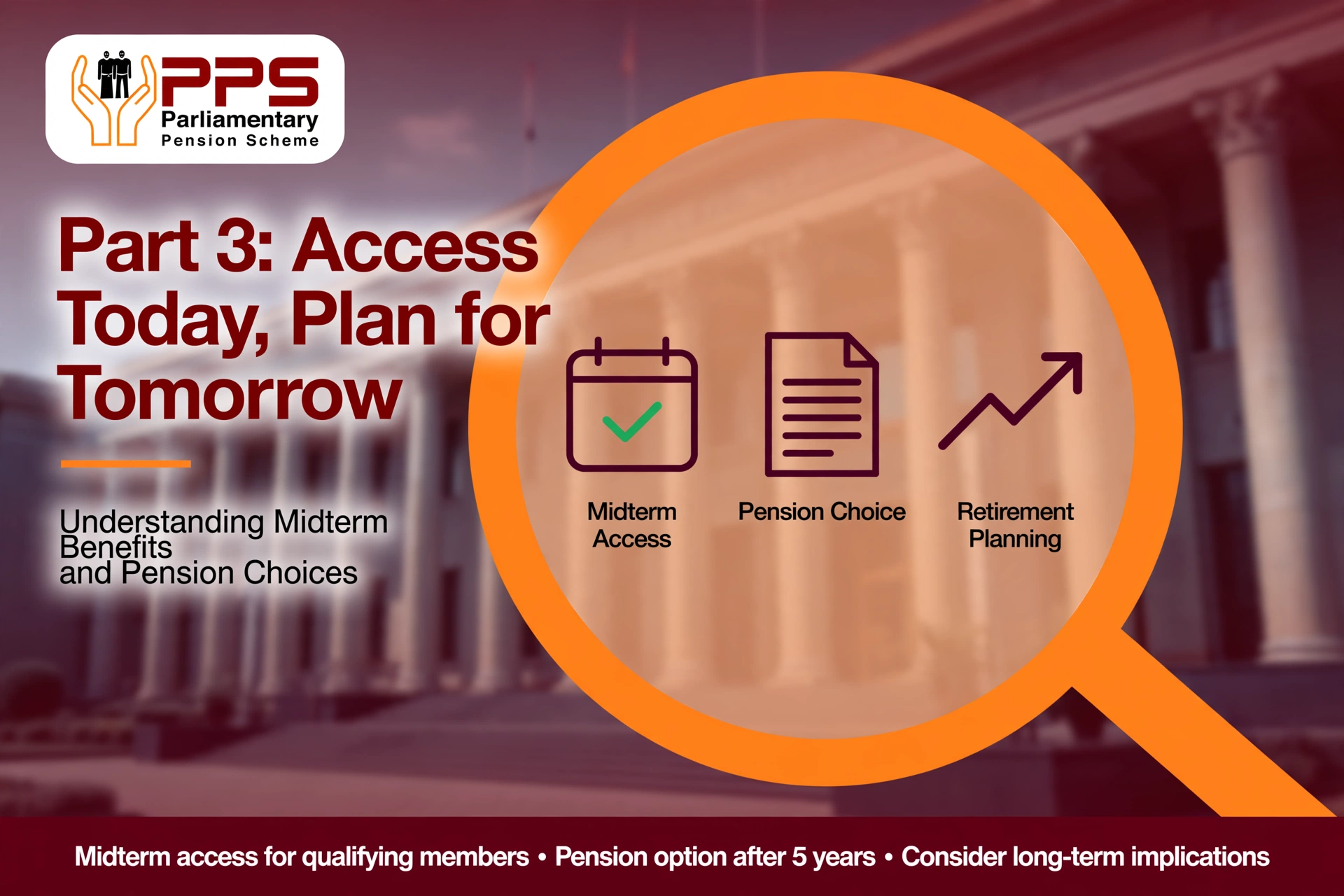
Access Today, Plan for Tomorrow: Understanding Midterm Benefits and Pension Choices
Retirement planning involves balancing today's needs with tomorrow's security. The 2023 amendment introduced greater flexibility, while making it even more important for members to understand how choices made during service can affect benefits available at retirement.
The Context: What Changed?
Midterm Access to Benefits: A member aged 45 or above who has contributed to the Scheme for at least ten years may apply to access a sum not exceeding 20% of his or her accrued benefits, subject to the terms, conditions and procedure prescribed by the Board.
Midterm Access Is a Benefit Choice, Not an Additional Payment: A midterm payment comes from the member's accumulated retirement benefits. It therefore reduces the amount remaining to support future retirement income. Members should weigh immediate needs against long-term retirement security before applying.
Midterm access also has an important retirement consequence. A member who has already accessed the 20% midterm benefit should not treat the commuted lump sum of up to one-third at retirement as a separate additional payment. The midterm benefit already received is taken into account when determining the lump-sum amount available when the member enrolls as a pensioner. Members should therefore understand this consequence before applying. The broader objective is to preserve adequate benefits to provide income throughout retirement.
A Pension Option After Five Years: Ordinarily, pension is payable to a member who ceases to be a member at age 45 or above after at least ten years of continuous service. The amended Act also allows a member who leaves at age 45 or above after at least five years of continuous service to elect to receive a pension instead of a refund, creating an additional route to retirement income.
Final Note: Before choosing midterm access, a refund or a pension, members should obtain an updated benefit statement and seek guidance from the Scheme on how each option may affect future retirement income. Flexibility is most valuable when supported by clear information and an understanding of the long-term consequences.